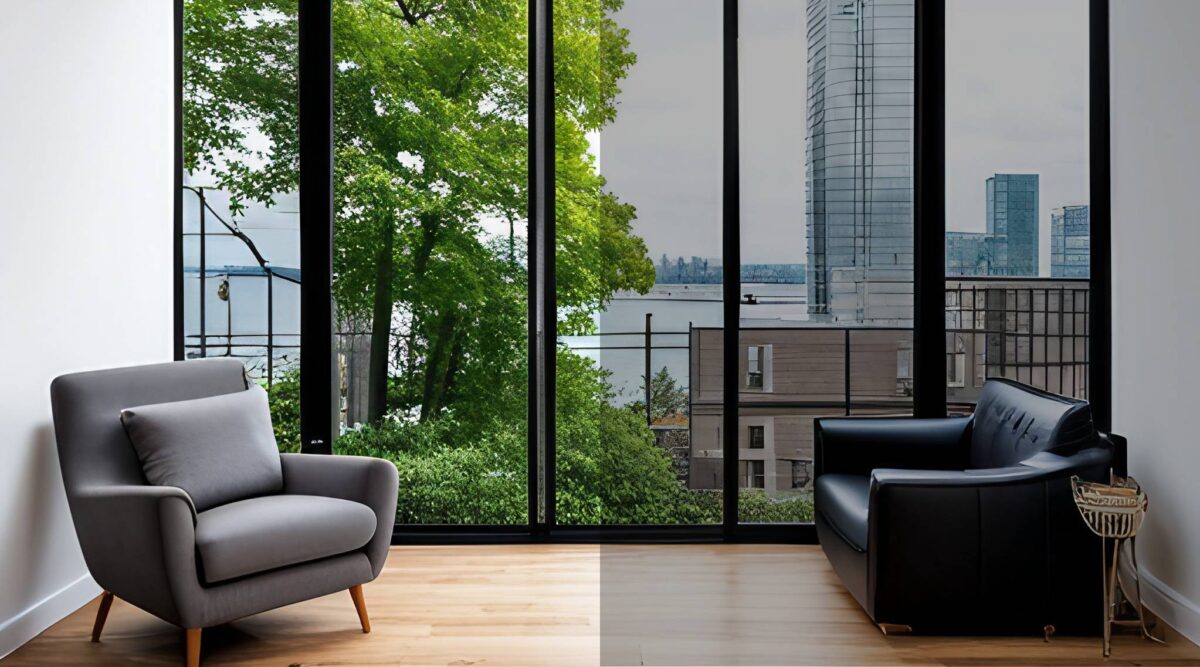
Window films are one of the most searched home and building upgrades in Toronto and the GTA. People usually search for window films when rooms feel too hot in summer, too cold in winter, or just uncomfortable near the windows all year. This is common in condos, offices, shops, and older houses with lots of glass.
Glass is often the biggest comfort problem in Toronto buildings. It lets heat rush in during July heat waves and lets warmth escape fast during January cold snaps. Sunlight hits floors, desks, and furniture every single day. Window films change how that glass behaves, so indoor spaces feel steadier and easier to live or work in.
This guide explains what window films are, how they work across all seasons, and why many Toronto property owners rely on them to improve comfort, reduce glare, and control energy use.
What Window Films Are and How They Work
Window films are thin layers applied directly to existing glass. Most residential and commercial window films are installed on the inside surface. Once installed, the film bonds to the glass and becomes part of the window.
Window films control three main things: heat, light, and UV rays. When sunlight hits untreated glass, energy passes through fast. That energy warms the room, causes glare, and fades surfaces over time. Window films slow and redirect that energy.
This matters in Toronto. Downtown condos with floor-to-ceiling glass heat up fast. Homes in Scarborough or East York lose warmth during winter. Even newer builds in Vaughan and Markham still struggle with comfort near large windows.
Window films help by:
- Reducing solar heat gain in summer
- Slowing heat loss in winter
- Cutting glare while keeping daylight
- Blocking up to 99% of UV rays
- Helping rooms feel more even in temperature
Comfort is not just about the thermostat. Surface temperature matters too. Cold glass pulls warmth from the room. Hot glass pushes heat inside. Window films reduce both effects.
If you want a simple breakdown of how window films work, this guide covers the basics well: Introduction to Window Films.
How Window Films Help During Toronto Summers
Summer is when most people notice window problems.
Sunlight carries heat through glass. South-facing condos near Lake Ontario or offices along Yonge Street often feel too warm by early afternoon. Window films reflect and absorb part of that solar energy before it enters the space.
People usually notice changes quickly:
- Rooms cool down faster
- Air conditioning runs less
- Less glare on screens and TVs
- Furniture fades slower
A real example comes from a small co-working space near King and Bathurst. Members kept moving desks away from the windows in summer. After window films were installed, desks stayed put and blinds stayed open. AC settings did not change, but comfort improved.
If blocking heat and sun is your main goal, this article explains how solar film works: Heat Blocking and UV Protection With Solar Film.
How Window Films Improve Comfort in Winter
Winter brings the opposite issue. Warm indoor air escapes through glass. Cold glass makes rooms feel drafty even when the heat is on.
Certain window films reflect indoor heat back into the room. This keeps glass closer to room temperature and reduces cold spots near windows.
Last winter, a small accounting office near Sheppard Avenue had staff wearing jackets indoors. The heating system worked fine, but the windows stayed cold. After window films were installed, desks near the glass felt normal again and complaints stopped.
If you want a clear answer on insulation and film, this article breaks it down: Does Window Film Really Insulate Against Heat and Cold?.
Glare Control and UV Protection Inside Toronto Buildings
Comfort is not only about temperature. Light matters too.
Strong glare makes it hard to work, read, or watch screens. Closing blinds blocks glare but also blocks daylight. Window films reduce glare while letting natural light in.
UV rays cause slow damage indoors. Floors fade. Furniture cracks. Artwork discolours. Many people do not realize UV rays pass through untreated glass.
Most quality window films block up to 99% of UV rays. This helps protect interiors and reduces UV exposure inside homes and offices.
Health Canada explains UV exposure through windows here: Government of Canada UV Index.
The U.S. Department of Energy also explains how windows affect heat and light: Energy Saver – Windows.
Why Window Films Make Sense for Toronto Homes and Businesses
Toronto weather changes fast. One week feels like summer. The next feels like winter. Window films work quietly through all of it.
Common residential uses include downtown condos, detached homes in Scarborough, and townhouses in Mississauga. Commercial uses include offices, clinics, gyms, and retail stores with large glass fronts.
Most window film installs finish in one day. There is no permit process and very little disruption.
A bakery near Danforth added window films to cut glare at the front counter. Customers stopped squinting at menu boards. Staff noticed fewer complaints during the lunch rush.
If you are comparing window films to replacing windows, this article explains the difference: Window Films vs Window Replacements.
Common Myths About Window Films
Many people delay window films because of old ideas they heard years ago.
Window films make rooms dark.
Many films are clear or lightly tinted. Daylight stays. Heat and glare drop.
Window films are only for offices.
Most installs today are residential.
Window films bubble or peel.
Low-grade film does. Professional film lasts many years.
Window films only help in summer.
Winter comfort gains are real and noticeable.
This article explains common myths in simple language: Common Misconceptions About Window Films.
Choosing the Right Window Films for Year-Round Comfort
Not all window films do the same job.
Some focus on heat control. Others focus on privacy or glare. Many modern window films balance all three.
A proper recommendation looks at:
- Window direction
- Glass type
- Building age
- Room use
A south-facing condo near the lake needs different window films than a north-facing home in Aurora. Picking the wrong film can limit results.
If privacy matters for comfort, this guide explains options clearly: Achieve Privacy With Window Films.
Why Local Window Film Installation Matters in the GTA
Toronto buildings vary a lot. Condo rules, heritage homes, and different glass coatings all affect how window films perform.
A local installer understands:
- Condo board rules
- Local building styles
- Glass types used by GTA builders
- Seasonal install conditions
One Liberty Village condo avoided delays because the installer selected a film approved by the building before install. A generic option would have failed review.
If you are hiring help, this checklist explains what to look for: How to Hire the Right Window Film Installer.
Frequently Asked Questions
Do window films really improve comfort all year?
Yes. Window films reduce heat gain in summer and slow heat loss in winter, which helps indoor temperatures stay more stable.
Do window films work during Toronto winters?
Yes. Certain window films reflect indoor heat back into the room and reduce cold spots near windows.
Do window films make rooms darker?
No. Many window films are clear or lightly tinted and allow natural light.
How long do professional window films last?
Professional window films often last 10 to 20 years when installed on proper glass.
Are window films cheaper than replacing windows?
In many cases, window films improve comfort at a much lower cost than replacing windows.